Big Fashion: Stop Burning Clothes
From 19 July, big fashion brands can't burn unsold clothes anymore. You're exempt if you're small, but the stock they used to torch now floods your market. Here's how to be on the right side of it.

Kaan Salli
28 July 2026
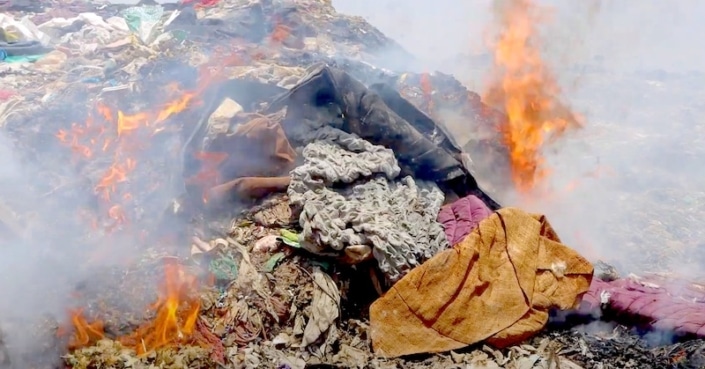
Listen: Big brands used to burn perfectly good clothes. Racks of unsold coats, shredded. Pallets of shoes, incinerated. All to protect a price point and clear a warehouse.
As of 19 July, they can't do that anymore. Not in the EU, not if they're large.
The rule lives inside the Ecodesign for Sustainable Products Regulation, the ESPR, which came into force in 2024. Textiles are the first product group to get a concrete ban. From 19 July 2026, any large company (250+ staff) is prohibited from destroying unsold clothes, accessories and footwear. Medium firms get until 2030. Small and micro businesses are exempt.
Instead of destroying stock, brands now have to sell it, including through discounts and other markets, donate it to charities or social enterprises, or send it for repair, refurbishment or recycling. They can only destroy items in narrow cases: unsafe, damaged, counterfeit, or refused by the charities they offered them to. And they have to keep proof for five years and publish an annual report on what they threw out.
The numbers behind this are ugly. The European Environment Agency reckons 4 to 9% of all textiles put on the EU market get destroyed before anyone wears them. That's between 264,000 and 594,000 tonnes a year. Made, shipped, never worn, then killed.
Why It Matters For Your Shop
Here's the honest part. If you run an independent shop or a small chain, the ban doesn't apply to you. You're exempt. So why care?
Because the stock has to go somewhere.
Millions of items that used to quietly vanish into a furnace now have to enter the market. Discounted, donated, resold. That flood lands in the same channels a lot of independents live in: outlet pricing, off-price racks, second-hand and vintage.
Two things follow. One, more cheap branded stock chasing the same shopper who might have walked into your shop. Two, a sourcing opening, if you want it. Brands and their liquidators need to move deadstock fast, and independents who can buy and resell it, or partner on donation and repair, get access to product they couldn't touch before.
Which way it cuts depends on you. A shop that treats resale and repair as real parts of the business gets a tailwind. A shop that ignores it just feels the price pressure.
For the people on the floor, this is a skills story too. Repair, refurbishment, resale, grading used stock for quality, none of it runs itself. It needs people who know garments and can price a coat that's been worn twice and still looks worth buying. That's frontline retail knowledge, and it's about to be worth more.
The "You're Exempt" Trap
I'd be careful reading "small and micro are exempt" as "this never touches me."
Look at the shape of it. Large firms now, medium firms in 2030, small firms watching from the side. Same staircase we saw on packaging, on digital rules, on due diligence. The exemption is a runway. The deadline still comes.
Medium retailers have a gift here: four years to sort out reverse logistics, donation partners and a resale process before it's mandatory. The ones who wait until 2029 will pay consultants a fortune to do in six months what they could have built slowly. The ones who start now barely notice the deadline.
My Honest Take
I like (LOVE!) this rule. I'll say that plainly.
Burning new clothes to protect a margin is one of the stupider habits modern retail picked up, and we've watched it up close for 30 years. The water, the cotton, the dye, the labour of whoever stitched it, all torched so a brand doesn't have to admit it over-ordered. That's waste wearing the costume of strategy.
Will some brands game it? Of course. "Rejected by charity" and "damaged" are soft edges, and a five-year paper trail only bites if inspectors actually inspect. Enforcement sits with national authorities, and we all know how evenly that goes across 27 countries.
But the direction is right. It pushes retail toward keeping things in use, which is where the good shops were quietly heading anyway, repairing and reselling because it made sense, long before Brussels said so.
For a small retailer, the move is simple. Don't wait to be forced. Treat unsold stock and returns as inventory to move, not a loss to hide. Build one donation relationship. Test a resale corner. Teach your staff to grade and price used product. You'll be ahead of the medium chains scrambling in 2030, and you'll be running the kind of shop customers increasingly want anyway.
As they say "a gem can't be polished without friction". Whoever said it first, it fits. This rule is friction. Handled early, it leaves the trade a little less wasteful and the shops that adapt a little sharper.
Sources: European Commission, DG Environment — Ban on destruction of unsold clothes and shoes enters into application (17 July 2026), CMS Law — New EU rules to prevent the destruction of unsold textiles, Anthesis — ESPR: The Ban On Destruction Of Unsold Goods
© Copyright Kaan Salli, 2026. All rights reserved.