The Screen Is Not the Solution
If your operations are messy, digitising them just makes a bigger mess. Digital transformation is not about screens, interfaces or new programmes. It is about what happens on the shopfloor because of them.

Binnaz Cubukcu
29 June 2026
You bought the software. You installed the hardware. Why does it feel like nothing actually changed?
There is a scene that plays out in retail head offices and store back offices across the businesses.
A leadership team gathers around a conference table. A vendor pulls up a sleek presentation. The dashboards are beautiful. The data visualisations are stunning. The promise is irresistible: efficiency, accuracy, and insights you never knew you were missing.
The cheque gets signed. The rollout begins.
Six months later, the frontline is still complaining. The managers are still frustrated. And the promised efficiency gains have not materialised. The only thing that has changed is that everyone now has to do extra admin to feed data into a system that does not seem to give anything back.
This is the reality of digital transformation in retail. It is expensive, it is exhausting, and too often, it fails. The reason is seldom the technology. It is often the backwards approach that is rushed because of excitement.
The Chaos Multiplier
If your operations are messy, digitising them just makes the mess faster.
Think of it like a highway. If the road is full of potholes and confusing signs, giving everyone a faster car does not fix the road. It just means they crash sooner. The same applies to retail systems. If your inventory counts are unreliable, a new stock management system will not fix that. It will simply display the wrong numbers on a prettier screen. If your returns process is convoluted, a new POS will not streamline it. It will just make the customer wait while you click through seven new menus.
Digital transformation is not about the screen. It is about what happens on the shopfloor because of the screen. And too many retailers forget that the shopfloor is where the actual value is created.
Start with the Person, Not the Product
The most successful transformations we have seen share one common trait. They start with a simple question: What is the biggest frustration our staff face every single day?
They do not start with the vendor brochure. They start with the associate who has been on the floor for five years and knows exactly where the inefficiencies are.
When you start with people who have been on the floor, meeting the customer and know exactly where the inefficiencies are then you get consistent and business critical answers:
"I spend too long looking for stock in the back and finding out we do not have it."
"I waste twenty minutes at the end of every shift reconciling paperwork that could be automated."
"I have to log into three different systems to check a customer's loyalty status, and the customer is getting impatient."
These are generally not technology problems. They are workflow problems. And if you solve the workflow problem first, the technology becomes the easy part.
This is what we call the Associate-First Approach in Retail Academy.
Instead of leading with, "This new system saves the company money," you lead with, "This new system saves you two hours of stock-taking per week."
Instead of mandating, "You must use this new app," you demonstrate, "This app will tell you exactly which shelf to check so you stop wasting time walking in circles."
When staff see the personal benefit, adoption becomes easier. They stop resisting the change and start asking for more of it.
The Exoskeleton Principle
There is a useful way to think about technology in retail. Imagine it as an exoskeleton.
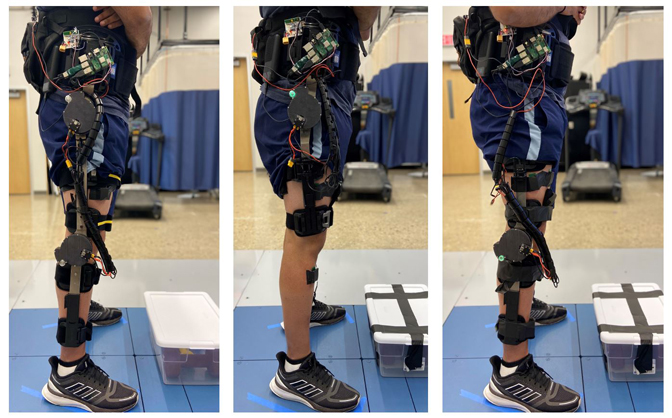
An exoskeleton does not replace the human body. It supports it. It takes the heavy lifting like the crushing weight of data, reporting, compliance, and admin, so the human inside is free to do what they do best.
In retail, that means the technology handles the operational heavy lifting so frontline can handle the emotional connection with the customer.
The physical store is not dying. It is evolving into an experience hub. Customers still come to stores for the touch and feel, test and try, the immediacy, and the human interaction. They do not come to watch staff stare at screens. So your digital tools should work quietly in the background, freeing up your people to have conversations, solve problems, and build relationships.
That is the real metric of success. Not how many transactions processed through the new app, but how much more time your associates now have to spend with customers.
Blurring the Lines
The other common pitfall is treating "online" and "offline" as separate worlds.
They are not. They are the same customer, moving between channels throughout their shopping journey. Digital transformation should make that journey seamless, not force the customer to choose a lane.
Consider the endless aisle concept. A customer walks into your store, cannot find their size, and the associate uses a mobile device to check stock at the nearest branch and have it shipped to their home. That is not a digital solution or a physical solution. It is just a good solution.
Or consider mobile checkout. Not to replace staff, but to eliminate the bottleneck during peak hours so the team can focus on the customers who actually need help, rather than standing behind a counter processing payments for thirty minutes straight.
These tools do not diminish the role of the store. They enhance it. They give staff superpowers they never had before.
The Real Test
Before you approve the next digital investment, step away from the vendor pitch. Walk onto your shopfloor and observe.
Where are your staff wasting time? What are they complaining about? What tasks do they dread?
Those are your transformation priorities. Not the shiny new dashboard. Not the AI-powered forecasting tool. The simple, boring, operational friction points that drain energy and enthusiasm from your team.
Fix those first. Then let the technology amplify the fix.
Because the goal of digital transformation is not to become a tech company. The goal is to become a retail company that uses tech to serve its people better. And when you serve your people better, they serve your customers better.
That is the transformation worth pursuing. Everything else is just noise.
© Copyright Binnaz Cubukcu, 2026. All rights reserved.